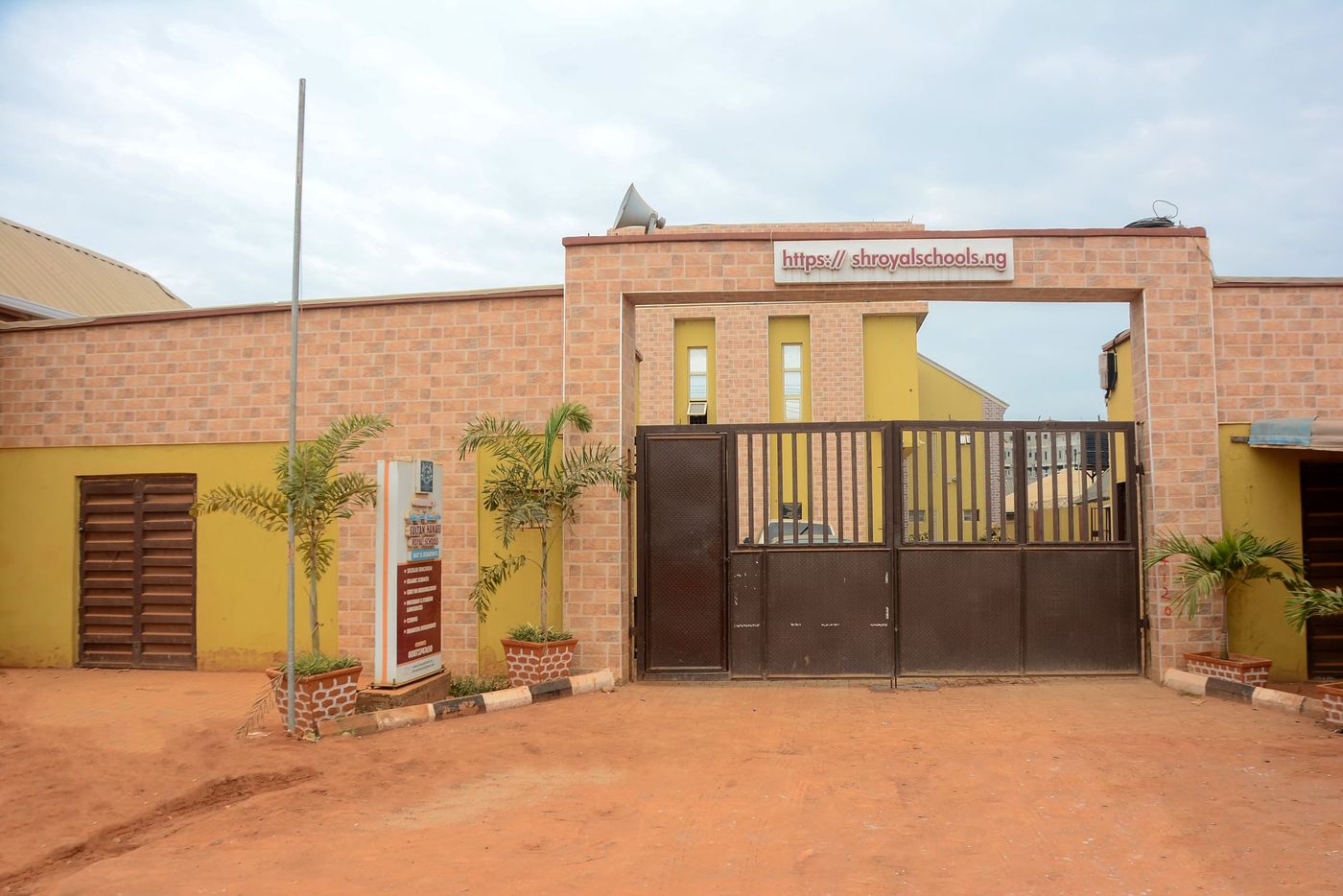
A structural account of what Sultan Hanafi Royal Schools has built — governance, infrastructure, and record — for the parents, regulators, partners, and donors who want to see the institution, not only the school.
Est. July 2016 · Ikorodu, Lagos State2026
Publisher's Imprint
Institutional Publication Information
Institution
Sultan Hanafi Royal Schools
Publisher
Sultan Hanafi Royal Schools, acting through the Office of the Founder & Head of Schools / Administrator
Address
15, Imowonla Road, AP Bus Stop, Off Gberigbe–Agura Road, Ikorodu, Lagos State, Nigeria
Public institutional publication of Sultan Hanafi Royal Schools.
Archival Statement
Retained in the Institution's publications archive; superseded editions remain on record.
Printing Specification
Set for A4 (210mm × 297mm) digital distribution and print-on-demand reproduction.
Rights Statement
May be shared unaltered for admissions and public-information purposes; not for modification or commercial redistribution without the Institution's written authorisation.
Document Title
Sultan Hanafi Royal Schools — The Institutional Masterplan Edition
Document ID
SHRS-PUB-MASTPLAN-2026-001
Edition
Edition I
Related Instrument
The Governance Charter of Sultan Hanafi Royal Schools (Policy GV-01 v3.0, Edition VII)
Institution Founded
July 2016 · Ikorodu, Lagos State, Nigeria
Publication Information02
A Statement From the Founder
An Institution, Not Only a School
Most prospectuses show you a school. This one is written to show you an institution — the governance behind it, the systems that run it, and the record it has already produced. That distinction matters to the audiences this edition is written for: a regulator deciding whether to trust our credentials, a donor deciding whether their contribution will be stewarded well, a partner deciding whether we are a serious counterpart.
My own background — two decades across banking, insurance, oil & gas, and consulting, an MSc from Edinburgh Business School, Heriot-Watt, a BSc from Oxford Brookes, and fellowships with the ACCA UK and ICAN — shapes how I have built this school: with the same operational and financial seriousness I learned before I ever founded it.
Founder's Note
Sultan Hanafi Royal Schools is young — founded in July 2016, with the Royal College established in 2021. Our case for trust rests on what we have actually built in that time, documented plainly in the pages that follow.
This edition exists because a school this young, serving one of Lagos State's most underserved communities, does not earn trust by claiming a heritage it does not have. It earns trust by being legible — by letting a regulator, a donor, or a prospective partner examine exactly how it is governed, what it has documented, and what it has actually delivered. That is the discipline every page of this edition follows.
2016
Founded
2021
Royal College Established
23
Governance Documents
2026
Ministry Registered
A Statement From the Founder03
Contents
A Structural Account
Each chapter documents one dimension of the institution — real, dated, and drawn from what has actually been built and recorded.
Institutional Overview
05
Our Journey, 2016–2026
06
Governance Architecture
07
The Policy Framework
08
Digital Campus Infrastructure
09
Built to Scale
10
Community & Impact
11
International Register
12
Our Vision
13
The Road Ahead
14
Academic Milestones
15
Partner With Us
16
A Note on Method
Every figure, date, and claim in this edition is drawn from SHRS's own governance register, technical documentation, and published record. Where a plan is real but not yet executed, it is named as such — this edition does not invent a dated strategic target, a second campus, or a formal partnership that does not exist.
12
Chapters
17
Pages
4
Audiences Addressed
0
Fabricated Claims
Contents04
At a Glance
Institutional Overview
Sultan Hanafi Royal Schools in structural summary — five institutions, one governance architecture, one crest.
2016
Founded
5
Schools, One Foundation
23
Governance Documents
7
Royal College Departments
Basic School, Royal College, the Qur'an College, School of Islamic and Arabic Studies, and the newly established Online & Distance Learning School operate under one foundation, one crest, and one governance architecture — spanning academic affairs, safeguarding, human resources, finance, technology, and Islamic education, all documented in a formal policy register. The fifth institution, recognised under the 2026 governance amendment, does not yet have students, a curriculum, or an appointed head.
1
Founded on Filial Honour
Named for the founder's late father, Anofi Aliu Akano — grown from the Imowonla community outward, not a franchise of a foreign model.
2
Hybrid by Design
Islamic and secular education held as equally rigorous, not one subordinate to the other.
3
Open to All
Open to Muslims and non-Muslims, males and females — a stated welcome, not a marketing gesture.
Institutional Overview05
Our Journey, 2016–2026
A Timeline of What Was Actually Built
2016
Foundation
Sultan Hanafi Royal Schools founded, rooted in the Imowonla community, Ikorodu, Lagos State.
2021
Royal College Established
Junior and Senior Secondary programmes (JSS 1–3, SSS 1–3) launched for students from age ten.
2022
Qur'an College & Islamic Studies Formalised
School of Islamic and Arabic Studies and the Qur'an College formally established, with Saudi Arabian curriculum resources and Ijazah certification.
2024
Ramadan Competition & ALA Prize
Inaugural Annual Ramadan Qur'an Competition; the ALA Endowment Prize established by Mr Lukman Anofi.
2025
Governor Commission
Commissioned by Engr. Seyi Makinde, Executive Governor of Oyo State.
2026
Ministry Registration & Digital Campus
Royal College achieved Ministry Registration and sat its first BECE cohort; Guardian and Student Portals went live.
2026
Governance Constitutional Amendment
The Board of Governors formally replaced the Board of Trustees; the Online & Distance Learning School was recognised as the institution's fifth school.
Our Journey, 2016–202606
Governance Architecture
A Chain of Accountability
Board of Governors → Board-Level Committees → Management Team → Management-Level Committees → Heads of Departments → Educators → Student Representatives → School Prefects → Class Captains → Student Clubs — one architecture, visible at every level of the institution.
A
Board of Governors
The institution's highest governing authority — a Chairman, a Secretary, and three Other Members.
B
Board-Level Committees
The Educational Technical, Finance, Safeguarding, Governance & Nominations, and Disciplinary & Ethics Committees, with one further Board-Level Committee reserved for future naming.
C
Management Team
Zakariya Olanrewaju Anofi, as Head of Schools/Administrator, together with the five schools' Heads. This office is held jointly with the Chairman of the Board of Governors — no executive authority exists outside these two offices.
D
Management-Level Committees
Seven standing committees — Da'wah, Academic, Sports, Communications & Public Affairs, Student Life, Admissions & Enrolment, and Health, Safety & Facilities — operating under Management Team authority.
E
Heads of Departments
Reporting to the appropriate school Head.
F
Educators
Faculty delivering the curriculum and the Hifz Journey directly.
G–J
Student Leadership
Student Representatives, School Prefects, Class Captains, and Student Clubs — the formal student-facing tier of the same architecture.
Governance Architecture07
The Policy Framework
Twenty-Three Governance Documents
Drafted in four disciplined phases, each reviewed for cross-document consistency before the next began.
Hifz Regulations, Ijazah Governance Framework — the school's own five-stage Hifz methodology, formally codified.
Technology, HR & Finance
AI Usage Policy, Information Security Policy, Acceptable Use Policy, Records Retention Policy, Staff Handbook, Financial Controls Policy.
6
Phase A Documents
5
Phase B Documents
10
Phase C Documents
2
Phase D Documents
Method
Each phase was preceded by a dependency review and followed by a cross-document consistency audit — a discipline borrowed directly from financial and regulatory governance practice, not typical of a school this size.
The Policy Framework08
Digital Campus Infrastructure
A Governed Operating System, Not a Website
Most competitor prospectuses show buildings and uniforms. Sultan Hanafi can show a governed, audited, permission-controlled institutional operating system.
1
Guardian & Student Portals
Two independent, database-backed authenticated roles — attendance, results, fees, and Hifz & Ijazah tracking.
2
Permission Engine
Data-driven access control, built directly from the published Role & Permission Matrix.
3
Founder / Executive Dashboard
A real-time institutional view of enrolment, attendance, and fee status across every school.
4
Registrar's Office
A formal system of record for promotions, withdrawals, graduations, transfers, and certificate issuance.
5
Staff Identity Platform
Authenticated staff logins distinct from guardian and student sessions, scoped by the Organisational Directory.
Neon
Postgres Database
Cloudflare
Hosting Platform
5
Governed Systems
1
Shared Data Source
Digital Campus Infrastructure09
Built to Scale
Architecture Designed for Growth
A structural fact about how the institution's systems are built — not an announcement of a second campus.
Every role in the Digital Campus's Permission Engine is expressed as role + institution, never a flat global grant — a Principal role is scoped to "own institution," a teacher role to "own assigned classes." Nothing in this structure is Sultan Hanafi–specific by design.
What This Means
The same architecture already absorbed the institution's newly recognised fifth school — the Online & Distance Learning School — without redesigning who can see what: adding it meant adding new institution and class records to the existing model, nothing more. A second campus or a future sixth institution would be added the same way. A future Principal at a second campus would receive the exact same role, scoped automatically to their own institution's data.
What This Is Not
This is a description of technical and governance readiness, not an announcement. Sultan Hanafi Royal Schools has not announced a second physical campus. When a real expansion decision is made, it will be documented here — not before.
Role +
Institution Model
1
INSERT to Add a Campus
0
Redesign Required
0
Campuses Announced
Built to Scale10
Community & Impact
Beyond the Classroom Gates
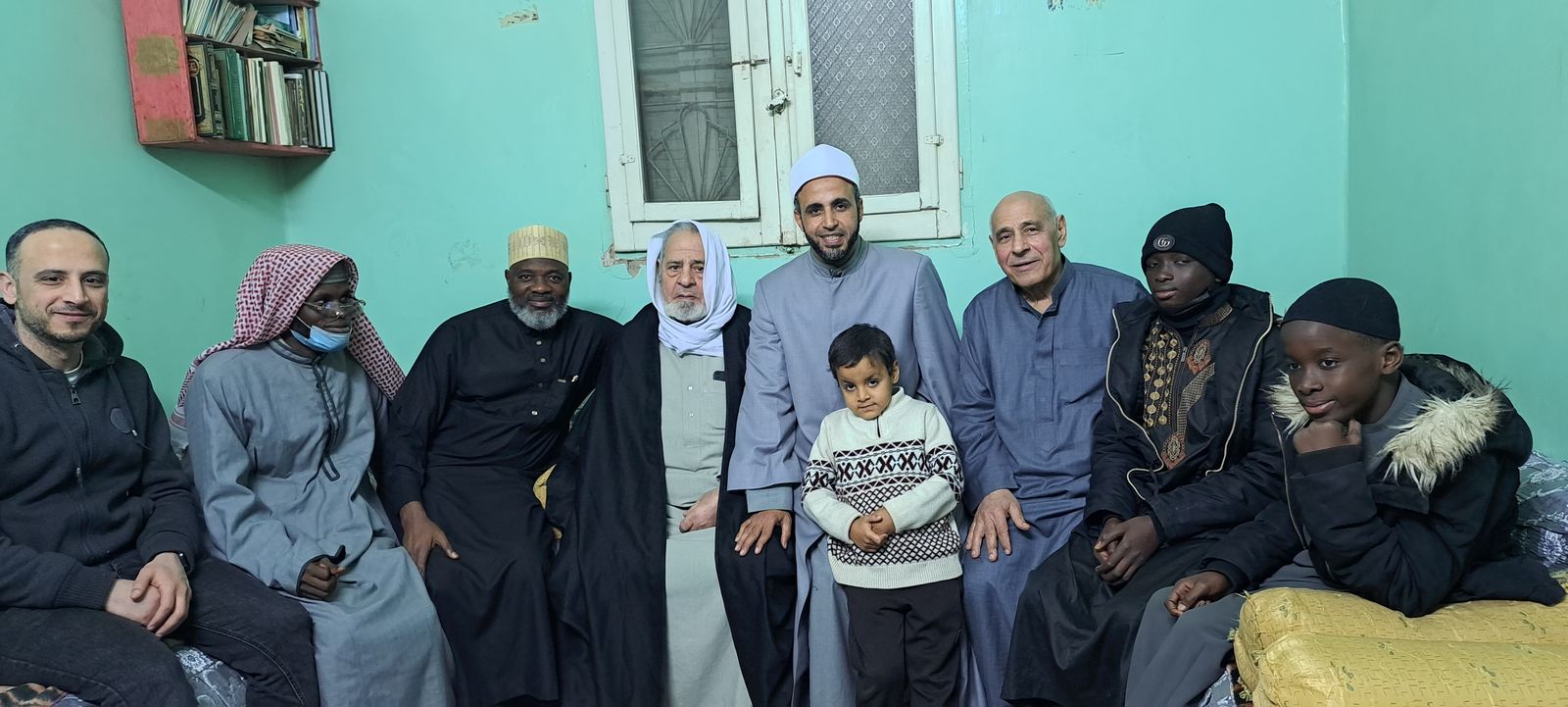
Rooted in the Imowonla community in Ikorodu, Sultan Hanafi has grown into a byword for what focused, values-led education can do for an underserved area — extending its reach through free community lectures, humanitarian relief during the COVID-19 lockdown, and infrastructure support such as road maintenance and community electrification.
Free
Community Lectures
COVID-19
Lockdown Relief
Roads
Maintenance Support
Power
Electrification Support
Community & Impact11
International Register
A Real, Not Aspirational, International Footprint
Our Founder holds degrees from Oxford Brookes University and Edinburgh Business School (Heriot-Watt University), and the school documents real scholarly visits abroad — the register this edition draws from is built on these facts, not on comparison to any international institution's lineage.
What This Is Not
Sultan Hanafi Royal Schools does not currently hold formal international partnership agreements or memoranda of understanding with named foreign institutions. Where such an agreement is signed, it will be documented here with the partner named — not before.
International Register12
Our Vision
A Trajectory, Not a Slogan
Our Published Vision
"To be recognised as a leading institution excelling in knowledge dissemination and character building — creating a positive impact wherever our presence is felt."
This is the one vision statement Sultan Hanafi Royal Schools has actually published. Rather than attach a fabricated dated target to it, this edition treats the statement as a direction, and lets the evidence already documented in this publication — the governance architecture, the Digital Campus, the community-impact record — stand as proof of the trajectory it describes.
Our Published Mission
"To provide a holistic education — imparting both Islamic and secular knowledge through rigorous research, instilling ethical behaviour, and contributing to a secure, informed, and progressive society."
Where SHRS leadership supplies a dated strategic vision in the future, it will be published here alongside the record that supports it — not before. Until then, the honest measure of trajectory is the one this edition documents throughout: real governance, real infrastructure, and a real, growing academic record.
V
Character Building
The CLEVER framework — Creativity, Leadership, Engagement, Versatility, Ethics, Reliability — is how the Vision statement's "character building" clause is actually operationalised, day to day.
Our Vision13
Named, Not Invented
The Road Ahead
Real, deliberate next steps in the institution's own governance and infrastructure roadmap — named plainly rather than dressed as a completed plan.
Next
Teacher & Staff Identity Expansion
Extending authenticated roles beyond guardians and students to teachers, principals, and administrators.
Planned
Registrar, Admissions & Finance Office Activation
Bringing the remaining offices named in the Role & Permission Matrix onto the same governed platform.
Roadmap
Full Learning Management System
Courses, assessments, and certificates — a categorically larger build requiring a real content and hosting budget decision.
Roadmap
MFA, SSO & Payment Integration
Stronger authentication and direct fee payment, once real providers are selected.
Named Gap
Arabic Translation, Full Portal Coverage
Both live portals remain English-only today — a pre-existing gap, named plainly rather than left unspoken.
Discipline
Every item above is real and specific enough to be checked against in a year's time — that accountability is the point of naming a roadmap honestly rather than dressing ambition as achievement.
The Road Ahead14
Academic Milestones
Results the Institution Can Point To
2026
Ministry Registered
1st
BECE Cohort Sat
2025
Governor Commission
2024
ALA Prize Established
By 2026, the Royal College had achieved Ministry Registration with the Lagos State Ministry of Education and seen its first cohort sit the Basic Education Certificate Examination. The ALA Endowment Prize, established in 2024 by Mr Lukman Anofi, Board Member, recognises the top three academic performers in each class every term.
Press Recognition
"Sultan Hanafi Royal Schools stands as a blueprint for how education can be a vehicle for transformative social change within marginalised communities." — Punch Newspaper, November 2025
7
Royal College Departments
Languages, Mathematics & ICT, Humanities, Science & Technology, Commerce & Management, Arabic, and Islamic Sciences — the full academic breadth behind the BECE result above.
Q
Qur'an College Ijazah Outcomes
A 24–36 month full-immersion Hifz programme, culminating in a certified, permanently recorded Ijazah — the institution's other academic outcome, alongside secular examination results.
Academic Milestones15
Partner With Us
Whoever You Are, There Is a Real Way In
This edition was written for more than one reader. Each finds a different, real point of entry below.
P
Parents
Begin an application through the Guardian Portal, or contact Admissions directly.
R
Regulators
Our full governance register and Ministry registration record are available on request.
D
Donors & Partners
The Sultan Zakariya Hanafi Foundation extends this institution's mission into the wider community — a real, verifiable channel for partnership.
S
Prospective Students & Alumni
Every Hifz & Ijazah record is permanent and verifiable years after graduation, wherever a student's path leads next.
Speak With Us
15, Imowonla Road, Off Gberigbe–Agura Road, Ikorodu, Lagos State · [email protected] · +234 (0) 807 374 7650